Connected around the trip.
Discovery, planning, booking, payments and post-booking experiences were improved as related journeys.

The extranet connects the customer promise to the partner work required to fulfil it, from listing content and availability to bookings, offers, staff and payments.
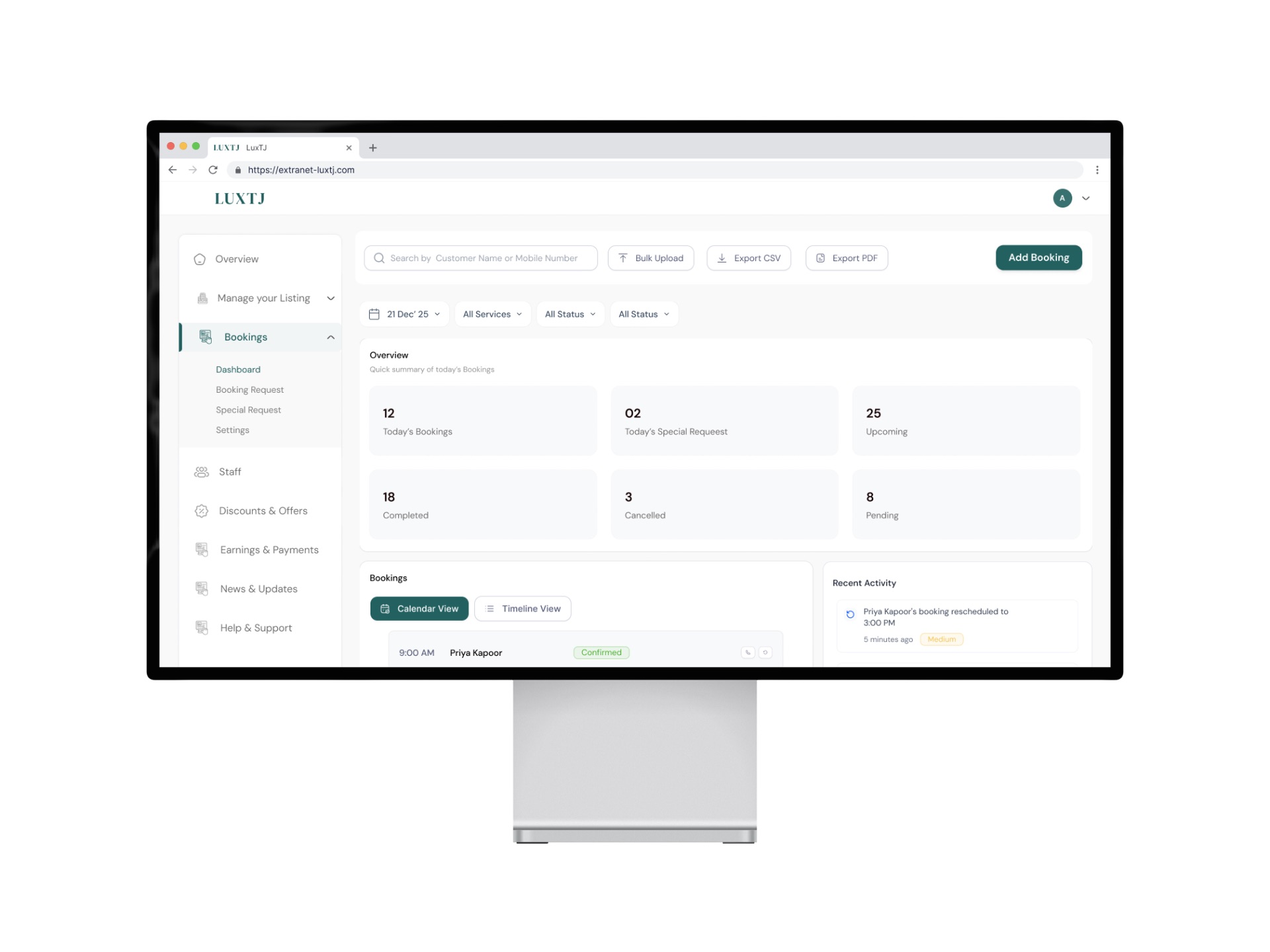
I designed the complete Luxury Travel website and extranet, connecting customer and internal workflows across web, extranet and mobile.
Discovery, planning, booking, payments and post-booking experiences were improved as related journeys.
Reusable patterns improved design consistency and made developer handoff more efficient.
Close stakeholder and developer collaboration helped resolve edge cases before launch.
Partners need to move between content, bookings, people and money while preserving the context of what they are managing. A dashboard can look clean and still fail if ownership, status or the next action is unclear.
Design questionHow might the extranet make complex partner operations feel predictable without hiding the detail people need to do the work?
The navigation follows the partner's responsibilities instead of mirroring the internal organisation of the business.
Create and maintain property information, imagery, amenities and experience details.
Keep reservation context, status and required partner actions visible.
Support clear roles and access without exposing unnecessary controls.
Manage discounts and promotional availability as structured product content.
Connect earnings, payment status and operational follow-up.
Give partners a predictable route to guidance and issue resolution.
Property imagery and customer-facing details remain recognisable, while administrative actions, settings and states are organised around the job the partner needs to complete.
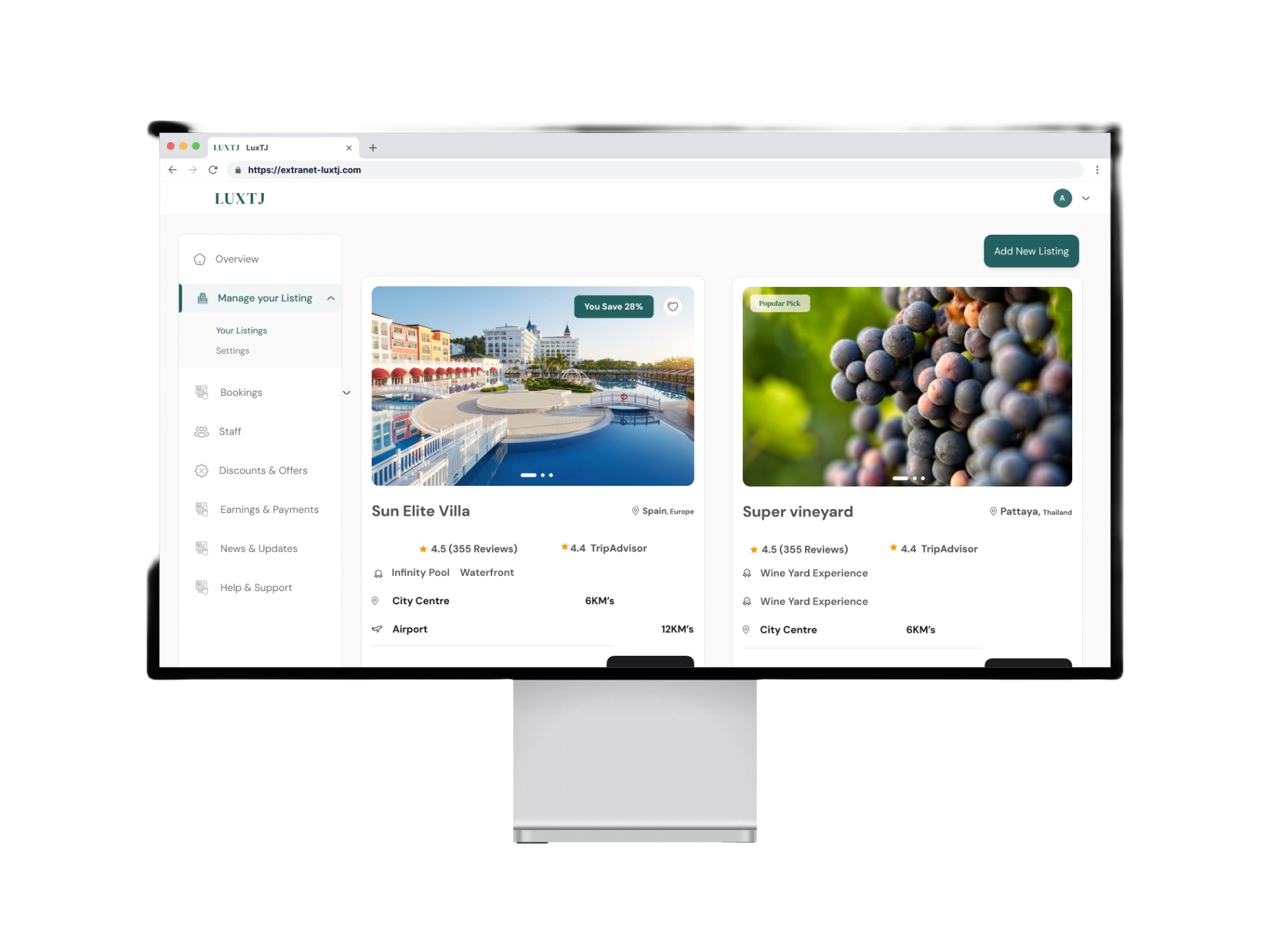
Frequent actions stay visible; specialist settings appear only when relevant.
Status, ownership and next actions travel with each booking or listing.
Destructive and financially meaningful actions explain their consequence before commitment.
Components and labels stay consistent across customer web, extranet and mobile.
Buttons, cards, filters, forms, statuses and summaries use the same interaction logic across customer web, partner extranet and mobile. The visual expression adapts; the behaviour stays familiar.
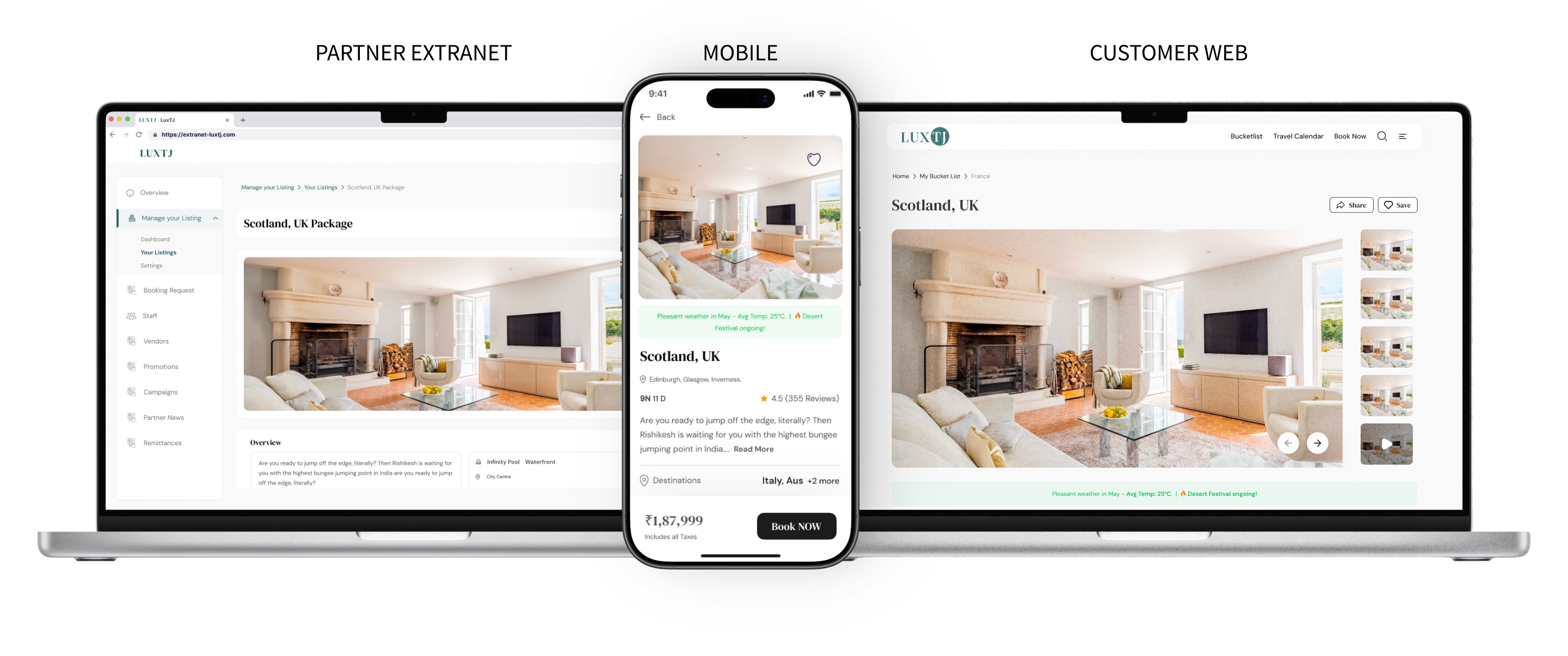
I worked closely with stakeholders and developers to turn business requirements into clear, implementation-ready designs. Reviews focused on behaviour, missing states and edge cases, not only visual matching.
An evidence-informed university project about safer, clearer care navigation in Scotland.